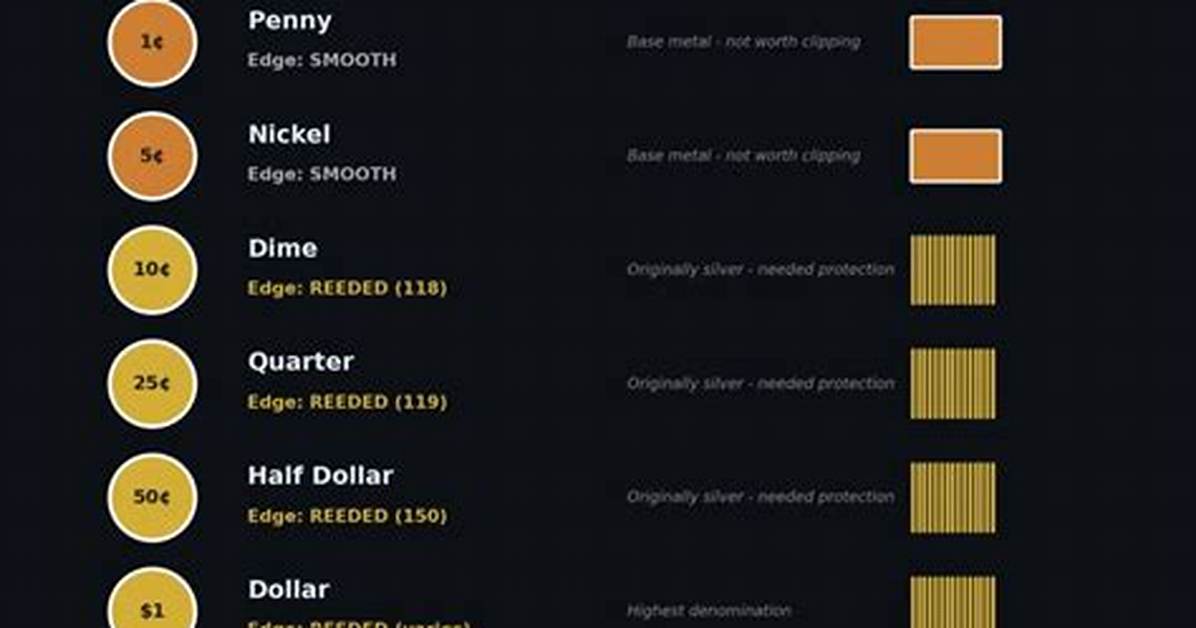
The value of a coin is a complicated matter. Early American coins were made of precious metals like silver and gold. Of course, their value was highly dependent on how much of that metal was present.
Back then, swindlers were always looking for ways to make a quick buck. Since there was value in the metal itself rather than just the currency, swindlers would shave down parts of the coin to stretch the value.
If they took a little bit off of multiple coins, they'd be able to keep the value of the coin itself intact while also collecting more metal of additional value. The method was called "clipping."
This was a major issue because it was an instance of early fraud and it caused issues in the economy. By hyperinflating how much money was out there, the balance was thrown out of whack.
By adding ridges to the coin, it became easier for shopkeepers to figure out if the coin had been tampered with. If one of the ridges was missing, the value of that coin was affected.
Eventually, the U.S. moved away from having true silver and other precious metals in the currency. However, the country held onto that tradition of adding ridges into the design as a nod to the past.
The damage had already been done, though, and the government had to figure out how to regulate the situation. According to Jeffrey L. Hoopes of the UNC Tax Center, the government imposed certain taxes to help fix the issue.
"The window tax in this case was imposed to help resolve this problem of a debased currency, raising revenue to help resolve the issue of clipping," he wrote.

