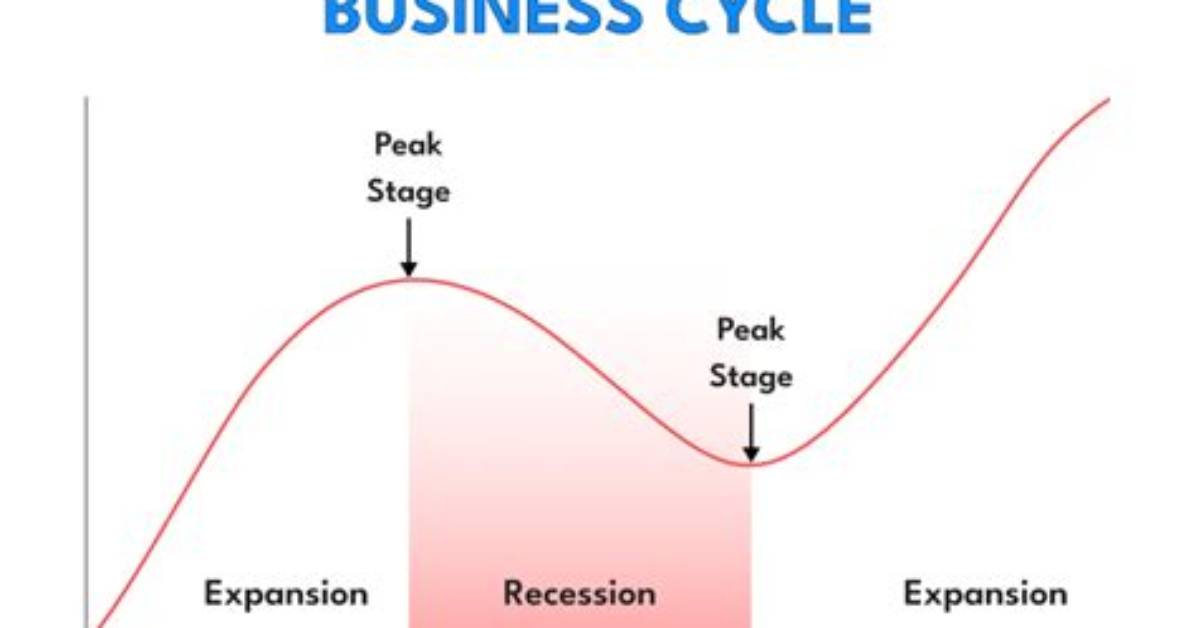
In the post-WWII period, major stock price downturns have often occurred around business cycle downturns, although there are exceptions. The relationship between stock prices and the business cycle is more closely related to growth rate cycles (GRCs) than to traditional business cycles. GRCs analyze the cyclical upswings and downswings in economic growth rate using key coincident economic indicators. This analysis is valuable for investors who are interested in understanding the linkages between equity markets and economic cycles.
When studying the relationship between the stock market and the business cycle, it is important to consider the concept of growth rate cycles (GRCs). GRCs focus on the fluctuation in economic growth rates, providing insights into the cyclical patterns of economic activity. By analyzing key coincident economic indicators, such as GDP, employment, and industrial production, GRCs can reveal the underlying trends and correlations between equity markets and the broader economy.
Growth Rate Cycles: Insights into Market Cycles
Growth rate cycles provide valuable insights into market cycles and the impact of economic growth on stock prices. During periods of economic expansion, with rising GDP, employment, and industrial production, stock prices tend to perform well. Investors perceive growth as a positive signal, fueling optimism and driving stock prices upward. Conversely, during economic contractions and recessions, when growth rates decline, stock prices often experience downward pressure as investors become more cautious.
“The relationship between stock prices and the business cycle is complex and multifaceted. While stock prices often follow the broader patterns of economic cycles, there are also a multitude of other factors that can impact stock market performance, including monetary policy, geopolitics, and investor sentiment.” – Mark Johnson, Financial Analyst
However, it is important to note that the relationship between stock prices and the business cycle is not always straightforward. There may be instances where stock prices do not align with the prevailing economic conditions. Factors such as market sentiment, investor confidence, and external shocks can influence stock prices, creating deviations from the expected correlation with the business cycle.
Understanding Business Cycle Correlation
The correlation between stock prices and the business cycle is a topic of ongoing analysis and debate among economists and financial experts. While some argue that stock prices reflect the market’s expectations of future economic conditions, others contend that market volatility and investor behavior can create a disconnect between stock prices and the business cycle. Therefore, understanding the complexities of this correlation requires a comprehensive examination of economic trends, market dynamics, and investor sentiment.
Investing During the Business Cycle
For investors, understanding the relationship between stock prices and the business cycle can inform investment strategies and asset allocation decisions. By monitoring growth rate cycles and key economic indicators, investors can gain insights into the broader economic conditions and anticipate potential shifts in market sentiment. This knowledge can help investors identify opportunities for growth and manage risk effectively.
| Growth Rate Cycle Phase | Stock Market Performance |
|---|---|
| Expansion | Stock prices tend to rise as economic indicators show positive growth. |
| Peak | Stock prices may begin to stabilize or experience slight declines as investors reassess future economic prospects. |
| Recession | Stock prices often decline as economic indicators show contraction and investors adopt a more cautious approach. |
| Trough | Stock prices may start to stabilize or experience a modest recovery as economic indicators show signs of improvement. |
| Recovery | Stock prices tend to rise as economic indicators show a return to growth and investor confidence improves. |

