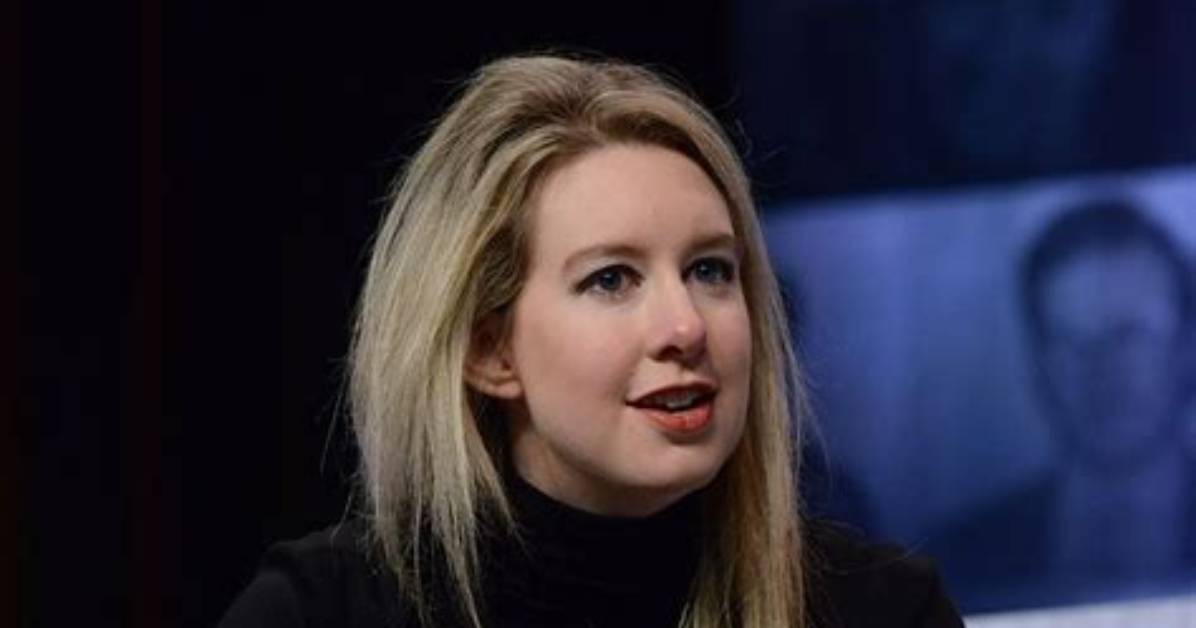
If there's one thing we can all agree on, it's the fact that tearing down women is practically a national pastime for the United States. And while we're not suggesting that's what's happening to Elizabeth Holmes (she did a lot of very bad things), we can see how she might reach a point where she felt like having a deeper voice would be beneficial.
Remember when the word "shrill" was used as an insult by Donald Trump in reference to Hillary Clinton during the 2016 Presidential campaign? The world went through this strange period where the recycled reason to discredit women was merely the register of their voices. This all stems from something having to do with how a voice with a higher register didn't translate well via radio in the good ol' days, but that has nothing to do with Elizabeth Holmes.
Rebecca Jarvis, host of the ABC News podcast The Dropout, spoke with Phyllis Gardner, a professor at Stanford, where Elizabeth attended for two years before dropping out. Phyllis, who taught at the medical school, was not in favor of one of her earlier ideas but recalled that Elizabeth's voice sounded different then. "When she came to me, she didn't have a low voice," Phyllis said. "It was just like a typical undergrad student. When I next saw her again, she's in this low voice, and I'm like, 'Oh my god.' It was quite awkward."
Several years later, when Theranos was in its beginning stages, Elizabeth would hire former Apple product designer Ana Arriola. Ana described Holmes as passionate, energetic, and "expressive with her hands." Ana also pointed out Elizabeth's "distinct voice," claiming she used it to draw people into "what it is she's conveying, and her conviction and her belief really shines through."
Ana added that it wasn't until later that she found out that Elizabeth's low voice was allegedly not real. "In all of my interactions with her, she never fell out of character. That was her voice. But other people I worked with actually caught her fall out of voice," she explained.
"Maybe she needed it to be more convincing to project a persona within a room amongst male VCs," she continued.
According to TMZ, who spoke with members of Elizabeth's family in March 2019, her voice is not fake. Evidently most people in their family have low voices, especially her grandmother. However, in an August 2021 episode of the WNYC Studios podcast On the Media, host Brooke Gladstone and University of Florida professor Tina Tallon listen to a 2005 interview Elizabeth did with NPR where her voice noticeably changes. Fast forward to the 11-minute mark to check it out.

