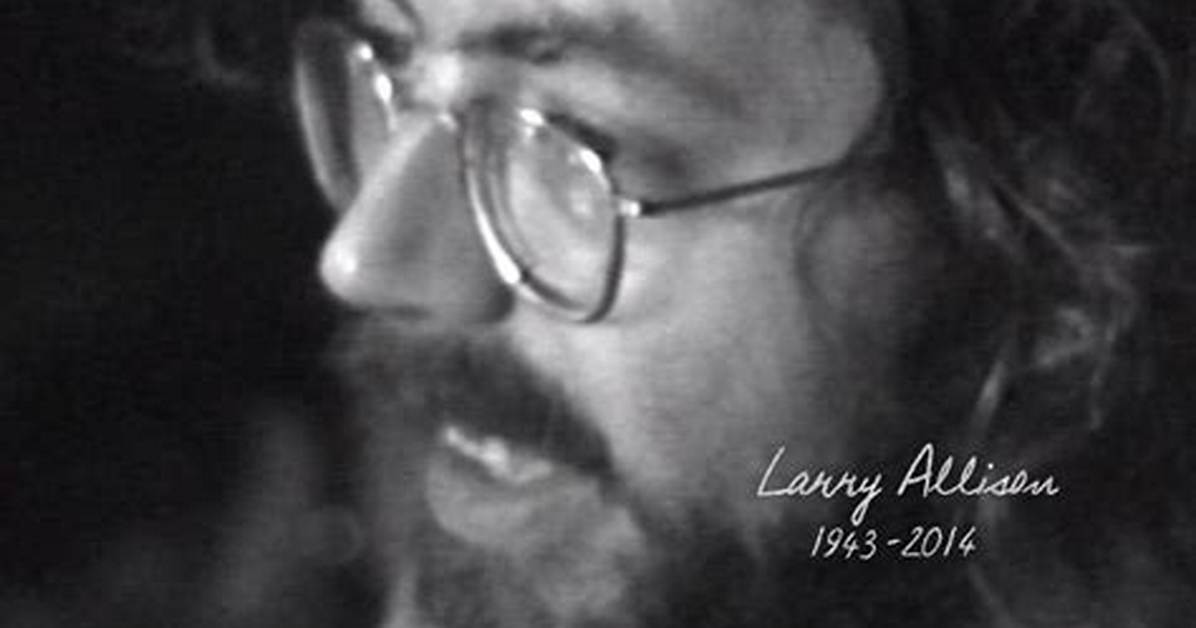
At the head of this brave social experiment, located near Woodstock in New York's Catskills, was Larry Allison, who isn't seen much in the film as the Crip Camp directors chose to restrict the story to the perspectives of their disabled subjects.
We hear from him at the beginning of the documentary, joking with the other campers about digging holes because he "thought it would be kinda funny if they tripped."
Something of a hippie in his own right, Larry says he conceived Jened as an "opportunity to try to do some different kinds of things."
"When the camp started back in the '50s," he explains, "it was the traditional kind of camp program. As it evolved into the '60s and '70s, what we tried to do was provide the kind of environment where teenagers could be teenagers, without all the stereotypes and labels."
The creation of the camp, Larry says, "was a byproduct of the times," an era ripe with social experimentation, a "fertile breeding ground for the rise and development of organizations instrumental in disability activism," as former camper Denise puts it in a 2001 interview with Larry himself.
Back when it was unheard of, Larry quickly realized that "the problem did not exist with people with disabilities," as he tells it in the Netflix film. Rather, "the problem existed with people who didn't have disabilities. It was our problem," he says.
"So, it was important for us to change," he continues in a voiceover. His exemplary attitude and revolutionary conviction in starting Camp Jened wasn't lost on the campers.

