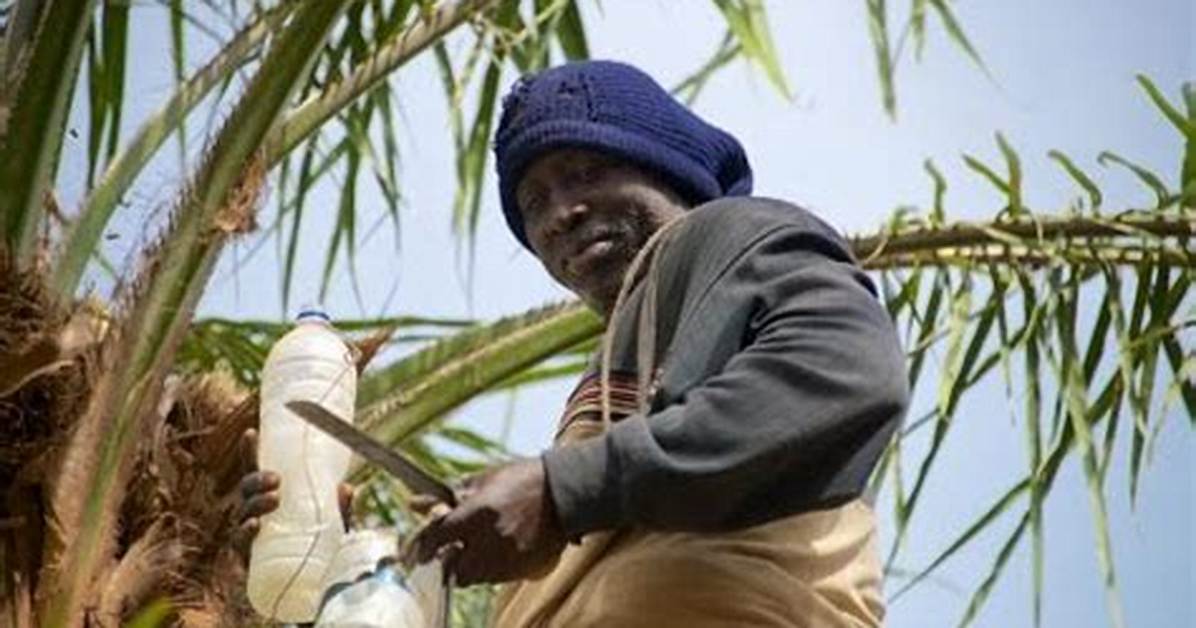
In Nigeria, palm wine tapping is prevalent in the southern and eastern regions, where palm trees are abundant.
The process of palm wine tapping involves climbing the palm tree and making a small incision in the tree's bark with a sharp instrument, such as a cutlass or a knife.
PAY ATTENTION: Сheck out news that is picked exactly for YOU ➡️ find the “Recommended for you” block on the home page and enjoy!
The sap, called "emu" in the Yoruba language and "ubu" in the Igbo language, is then collected in a container, usually made of bamboo or plastic.
Across some relaxation spots in Lagos, Nigeria's most populous city, a 150-centilitre bottle of palm wine is sold for $1.1 - or higher, depending on which area of the commercial town the drink is being sold and to whom, an article by The Anadolu Agency posited.
The collected sap is left to ferment for a few hours or days, depending on the desired taste and alcohol content the tapper hopes to achieve.
Palm wine is a mildly alcoholic drink often consumed fresh, although it can be stored for a short period.
Palm wine tapping is an essential source of livelihood for many people in Nigeria, particularly in rural areas. It is also an important part of the country's cultural heritage and is often featured in festivals and celebrations.

