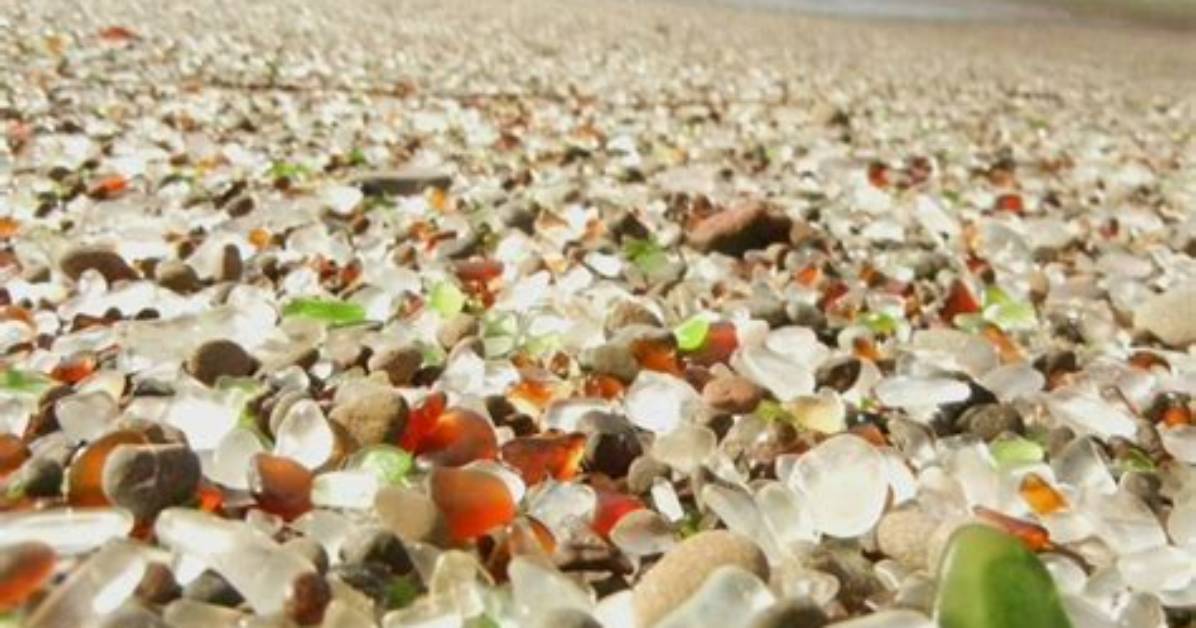
Located in Northern California, Fort Bragg’s Glass Beach is a remarkable testament to the power of nature’s transformation. Once a dumping ground for garbage, this beach has been beautifully reborn as a haven for colorful sea glass.
The history of Fort Bragg’s Glass Beach dates back to its days as a landfill. From the early 1900s until its closure in 1967, locals used this area to dispose of their waste. Over the years, the relentless waves of the Pacific Ocean transformed the glass shards and debris into smooth, polished gems.
Today, the beach is divided into three distinct areas, each offering its own unique collection of sea glass treasures. Two of these areas can be easily accessed by foot, while the third requires a boat or kayak for entry. Visitors are greeted with a stunning display of clear, brown, and green sea glass, with the occasional rare color after a storm.
This transformation of discarded glass into vibrant sea glass is a captivating sight to behold. As you stroll along the shore, the kaleidoscope of sea glass colors glistening in the sunlight creates a mesmerizing mosaic.
“The beach is a true testament to the power of nature’s ability to reclaim and transform waste into something beautiful. It’s a unique experience to witness the history and transformation of this once-overlooked landfill.”
Exploring the Beauty of Fort Bragg’s Glass Beach
Accessing this captivating beach is relatively easy, thanks to its location within MacKerricher State Park. Visitors can enjoy a scenic stroll along the coastline, taking in the breathtaking views and searching for their own sea glass treasures.
As you explore Fort Bragg’s Glass Beach, keep in mind the importance of preserving its natural beauty. It is encouraged to leave the sea glass on the beach for others to discover and enjoy. By practicing ethical collecting, we can ensure the longevity of this remarkable coastal gem.
| Sea Glass Colors | Description |
|---|---|
| Clear | The most common color found on Fort Bragg’s Glass Beach, clear sea glass has a timeless beauty. |
| Brown | Brown sea glass adds warmth to the beach, often originating from old beer bottles and medicine bottles. |
| Green | Green sea glass can vary in shade, from vivid emerald to seafoam green, and is frequently sourced from wine bottles and soda bottles. |
| Rare Colors | After a storm, the beach occasionally reveals rare sea glass colors, such as cobalt blue, violet, or red. |
Fort Bragg’s Glass Beach continues to be a popular destination for visitors seeking the beauty of sea glass and the serenity of the California coast. Its history serves as a reminder that even in the most unlikely places, beauty can emerge from discarded remnants, leaving us with an enduring sense of wonder.

