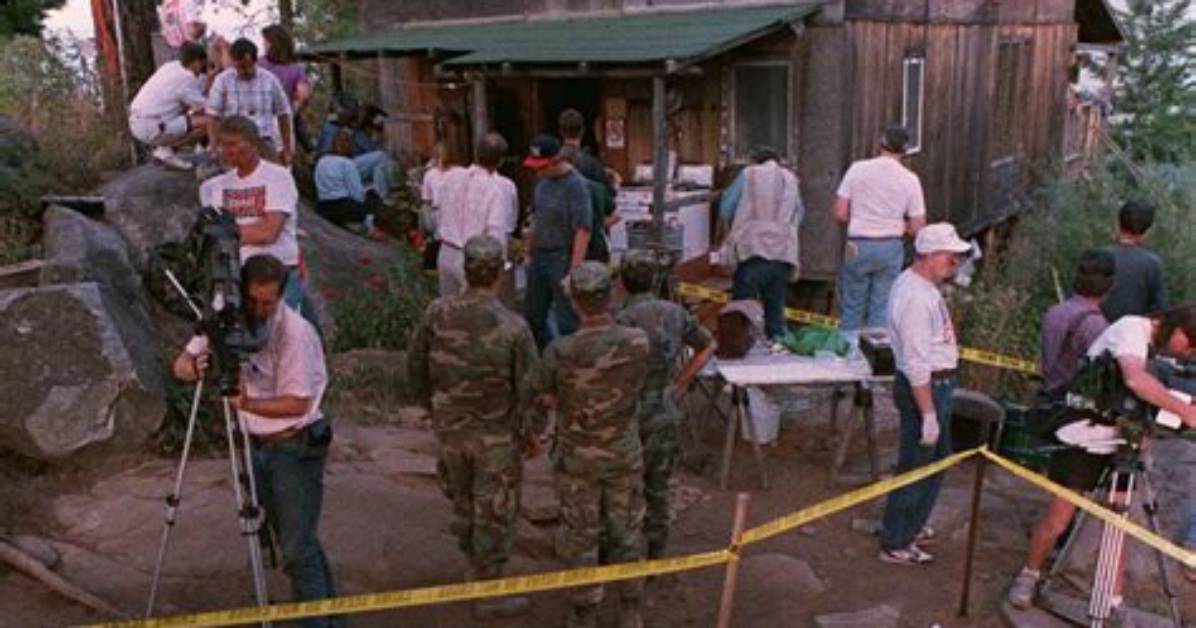
Gary Noeser wasn't the hostage negotiator at Ruby Ridge, but an event concerning the FBI did occur on the Idaho mountain top.
Randy Weaver was a former U.S. Army engineer who identified as a white separatist. In the 1980s, he began attending meetings of the Aryan Nations, a prominent white supremacist group, which is where he met a Bureau of Alcohol, Tobacco and Firearms (ATF) informant. Unluckily for Weaver, he wasn't aware of the man's informant status when he sold him two sawed-off shotguns in 1989.
Although the ATF attempting to recruit Weaver as an informant himself, he refused, resulting in getting a weapons charge against him. His trial was set for Feb. 19, 1991, but it was moved to Feb. 20. Unfortunately, Weaver was incorrectly sent a letter saying it was moved to March 20. When Weaver failed to show up on Feb. 20 because he was given the wrong date, a warrant was issued for his arrest.
The U.S. Marshals believed that Weaver would likely become violent during an arrest so they began a surveillance mission around Weaver's cabin, which housed him, his wife, Vicki; his children; and his friend, Kevin Harris. On Aug. 21, 1992, the Weavers' dog discovered the hidden marshals and the dog was subsequently shot by them. What resulted was a shootout that caused the death of the Weavers' 14-year-old son, Sammy, and U.S. Marshal William Degan, who was shot by Harris.
Although a deputy marshal by the name of Larry T. Cooper was accused of killing Sammy Weaver, Cooper and another deputy marshal would later attest that Weaver had killed his own son.
The day following the shootout, the FBI were called in. Lon Horiuchi, an FBI sniper, opened fire when he believed Weaver and Harris were attempted to shoot an FBI helicopter. His shot hit Weaver but it did not prove fatal. A second shot hit Vicki Weaver, who was holding the couple's infant daughter.
She died quickly, as she had been shot in the face, but her body remained in the cabin for the length of the Weavers' standoff with the authorities: 11 days.
When Weaver and Harris surrendered, they were charged with a list of crimes including murder, conspiracy, and assault but both were ultimately cleared, except for Weaver's charge of failing to appear in court, which he was convicted of. The marshal who killed Vicki Weaver had charges of involuntary manslaughter placed against him, but the state of Idaho eventually dropped them.

